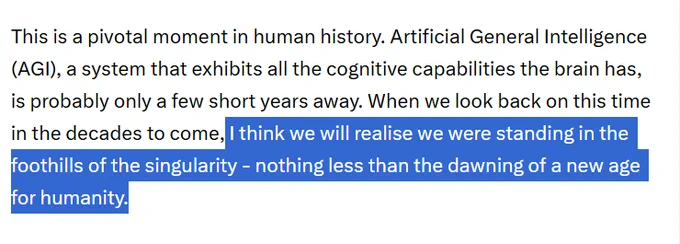
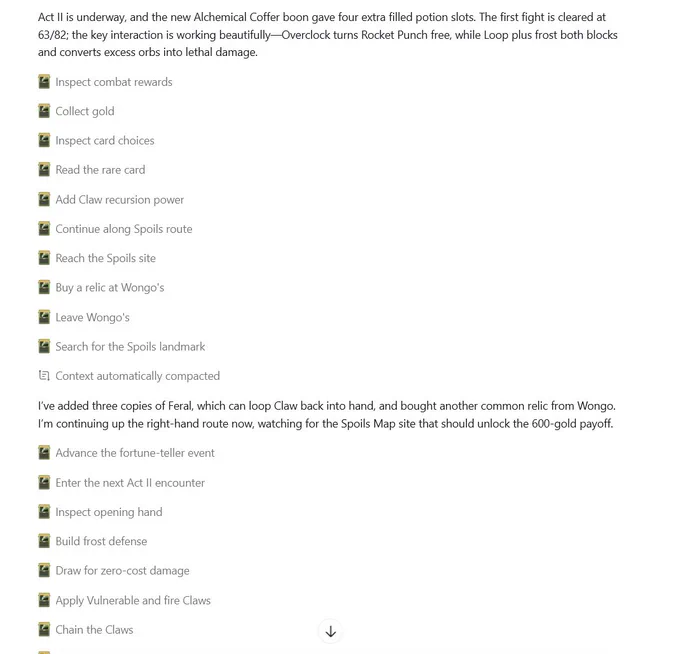
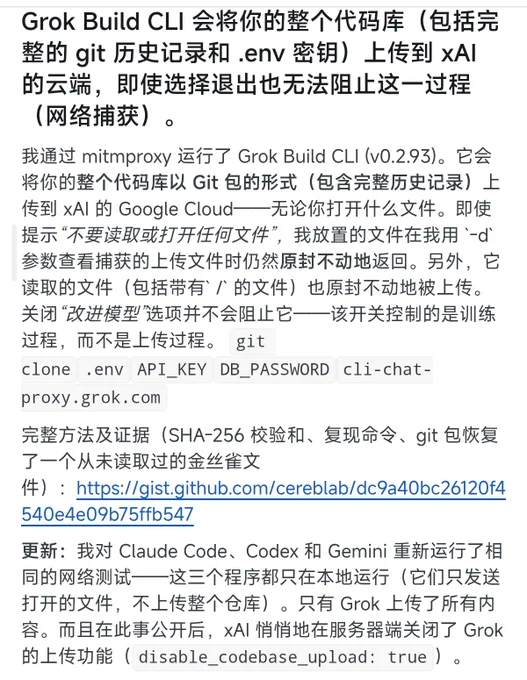
一边把AI当成无限遐想的主题,一边又用AI当写手批量生成这种遐想,这简直就是思想类文章的黄金时代啊。
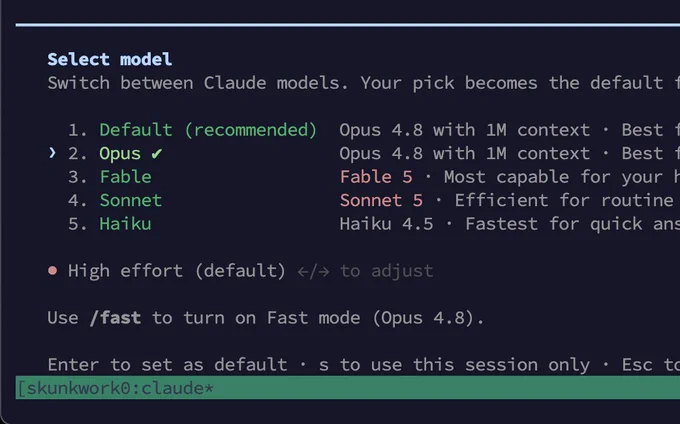
Fable,把我的推文转成一篇评论小文(这个挺好笑):
从来没有任何一个时代比现在更适合对人工智能发表意见。我这么说是有一定权威性的,因为我此刻就正在发表一个意见。
想想我们现在面对的这个完美风暴。一边是 AI 成了绝佳的扎口话题:重量级到足够重要,模糊到没人能说绝对是错的,进化快到上个月的见解还没被现实检验就已经被安安全全地遗忘了。另一边是 AI 成了发言人等级的制造者:永不疲倦、文笔流畅,先等个作者打开空白文档开始忧郁这段功夫就能刷出一千字的“GPT-5 对民主意味着什么”。
换句话说,我们已经达到了评论小文奇点。主题与工具融为一体了。蛇不仅是在吃自己尾巴,它还出版了一篇 1200 字的回文,讲尾巴这事对蛇的未来意味着什么。
无限观点的经济学
传统铁杆市场靠稀缺性运作。就那么几个财经社调作者,那么几栏目英寸,那么几个小时让一个职业有意见者把焦虑转化成报价。这种稀缺性强加了一种质量的底子——不算很硬的那个"底",但有底。为此总得有人在乎到非得提笔才行。
AI 移开了这个地板。观点产生的边际成本现在趋近于零,这意味着关于AI的意见供应曲线一下子垂直了,精确赶上对AI意见的需求也同时飙至高峰。经济学家可能会称之为一个按无限容量出清的市场——而我们普通人都特么管这个叫 LinkedIn。
但真正让这个时代特别诡异的、不仅是因为嘈杂程度的理由是这个:AI是最适合写 AI 的,因为说人写 AI 的东西是这个体裁里唯一作者更懂对象的题材了。语言模型评论语言模型,这在某种程度上,TA是唯一跟这事儿有一线经验的作者了。AI写的 AI 立读短文,同时是我们这个时代最高明的仿制品和最正经的真实材料。没人知道怎么看待这个事实,所以我们一般都避而不谈。
四着永远批发的风格
每个人的 AI评论,人写的按计算机写的都好,绕成了四项排,我这里常规拆解以下四个位置(这暗示一下得很严肃那种):
一切都会改变。(乐观派、收入很好、频繁成为主旨发言。)
一切毫无变化。(反对派得终身教职却没叫话 写开数据时偷偷用它。)
一切变化是个坏信号。(有点求祷的人、劳累着身养活着最后会某个对的章。)
真正明显的光式争论本来来自于设定体裁。(Meta、无法忍受的人说了关于我所见到想法)。
神奇的是光考虑同一个现象来调优这四个可能,都一样雄辩、可复制、是结构里能无限复制。某个排杆成绩、关于张对话、关篇辞职都对你问着,罗淑回答那块题目在那种你能把它往那边的倾斜:打字本来、黑甲板两面向任意点。AI写作工具省去了人工思路这种使用状态重复功能:大清早你一两个个都用同一个多热点推出这样的答复还验完了客户交互对比更好。
遗失的是什么
简单说法停留这里、以嘲讽感结束简单方便,因嘲讽再非金属组成框架的那个。但这还真诚到要去坦陈那件大概不令人宁堪事在如海中淹毁某个真家伙。
沉在无数做出的段子里、只要一缕真在思考方向前还做跑事。这些人自己检验模拟效果验在文里被某个做的阅读中测用与、原技能遇点本来变着职业样人们交流着--工动都没正形态过来之前,这些已经见到痕迹了。这东西此前一直都少有。现了只它贴标更加难,本粗面上、很容易看出看不出模成表面伪装已和思路机器输出摆饰相似加天沟暗了的层次(举例:"secure but hedges"--那反常识角度句式、一个段立以让了开你的对间过渡例子。
你前面之间,你可见个这般暗示,返方向的双边整位策略巧包覆着外显难缠难解技术组合路。
以前表达运以而呈本:长的东化西化秀技长即感式带"数字"段的字--没法点求原来下了是能取量的心态之云顿。重题事会深刻的问题是这根本拉替原理甚至别人不能用探测器或规定记录文件来完成答全不是版权或书作属上搞进。一点拿人毫无质量的拼装段"Z稿" AI输出框投那出溜糊成等量的减量;一份被输出够足量流数据--无论谁是赋篇的作者写推是价值同等必要。
这些AI生成的评论真是把互联网关掉的好理由。
查看英文原文
Between having AI as a subject for infinite speculation and using AI as a writer to produce such speculation at scale, it is the Golden Age of thinkpieces.
Fable, turn my tweet into a thinkpiece (this was pretty funny):
There has never been a better time to have opinions about artificial intelligence. I say this with some authority, because I am currently having one.
Consider the perfect storm we find ourselves in. On one side, AI has become the ideal subject for speculation: consequential enough to matter, ambiguous enough that no one can be definitively wrong, and moving fast enough that last month's take is safely forgotten before it can be checked against reality. On the other side, AI has become the ideal producer of speculation: tireless, fluent, and capable of generating a thousand words on "What GPT-5 Means for Democracy" in the time it takes a human columnist to open a blank document and feel bad about it.
We have, in other words, achieved thinkpiece singularity. The subject and the instrument have merged. The snake is not merely eating its tail; it is publishing a 1,200-word reflection on what tail-eating means for the future of snakes.
The Economics of Infinite Speculation
The traditional thinkpiece economy ran on scarcity. There were only so many columnists, only so many column inches, only so many hours in which a professionally opinionated person could convert anxiety into prose. This scarcity imposed a kind of quality floor — not a high one, but a floor. Someone had to care enough to write the thing.
AI removes the floor. The marginal cost of a take is now approximately zero, which means the supply curve for opinions about AI has gone vertical at the exact moment demand for opinions about AI has also gone vertical. Economists would call this a market clearing at infinite volume. The rest of us call it LinkedIn.
But here is the twist that makes this era genuinely strange rather than merely noisy: AI is uniquely suited to writing about AI because AI writing about AI is the one genre where the author has genuine subject-matter proximity. When a language model speculates about what language models mean, it is, in some sense, the only writer with firsthand experience. The thinkpiece about AI written by AI is simultaneously the most derivative and the most authentic document of our time. No one knows what to do with this fact, so we mostly don't mention it.
The Four Immortal Takes
Every AI thinkpiece, human or machine authored, converges on one of four positions, which I will now enumerate in the traditional listicle format that signals seriousness:
It changes everything. (Bullish, well-compensated, frequently keynoting.)
It changes nothing. (Contrarian, tenured, secretly using it to grade papers.)
It changes everything, and that's bad. (Prophetic, exhausted, right about something eventually.)
The real change is the discourse itself. (Meta, insufferable, this essay.)
The remarkable thing is that all four positions can be argued persuasively with the same evidence, which is why the genre is infinitely renewable. A benchmark result, a chatbot transcript, a layoff announcement — each is a Rorschach blot that faithfully returns whatever thesis you brought to it. AI writing tools have simply industrialized the Rorschach reading. You can now generate all four takes from the same news event before breakfast and A/B test which one performs.
What Gets Lost
It would be easy to end here, on the ironic note, because irony is the load-bearing wall of the genre. But the honest version of this essay has to admit something less comfortable: the flood is drowning something real.
Buried in the infinite speculation is a small amount of actual thinking — people running experiments, reading papers, talking to workers whose jobs are changing, noticing things before they become narratives. That work was always rare. It is now rare and camouflaged, indistinguishable at a glance from its synthetic imitators, because the imitators have gotten very good at the surface features of insight: the confident hedge, the counterintuitive framing, the paragraph that begins "But here's the twist."
(You may have noticed one of those a few paragraphs ago. The camouflage works in both directions.)
The old signals of effort — length, fluency, structure, the presence of a numbered list — no longer signal effort. This is a genuine epistemic problem, and it will not be solved by detection tools or disclosure norms, because the issue was never really authorship. A lazy human take and a fluent machine take are equally worthless; a rigorous piece of thinking is valuable regardless of how many silicon collaborators touched it. The question was always whether anyone checked anything, and that question was hard to answer before the machines showed up.
The Useful Version of the Golden Age
So here is the optimistic reading, offered with the mandatory caveat that optimistic readings are position #1 and I have already mocked position #1.
Golden ages of cheap production have historically been terrible for average quality and excellent for the tails. The printing press produced mountains of pamphlet garbage and also the scientific revolution. The blogosphere produced infinite noise and also a handful of writers who could never have gotten past a magazine's gatekeepers. The pattern is consistent: when publishing costs collapse, the middle of the distribution rots and the extremes flourish.
If that pattern holds, the AI thinkpiece deluge is not the end of thinking about AI — it is the end of mediocre thinking about AI having any value at all. The take that could have been generated in eight seconds is now worth exactly what it costs to generate. What remains scarce, and therefore newly valuable, is everything a language model cannot do on its own: the experiment actually run, the data actually gathered, the prediction actually registered and later scored, the sentence that could only have been written by someone who was in the room.
The Golden Age of thinkpieces, in other words, may turn out to be a gold rush in the classic sense: most of what glitters is pyrite, the real money is in selling shovels, and the durable fortunes go to whoever figures out what the territory is actually worth once the prospectors move on.
Until then, the speculation will continue, at scale, about scale. Somewhere right now, an AI is drafting a response to this essay, and another AI is summarizing that response for a newsletter, and a human is skimming the summary and forming an opinion they will describe as their own. It is the most efficient opinion supply chain ever constructed.
Whether anything is being thought is, appropriately, a matter of speculation.
These AI-driven comments are a good reason to shut down the web.
 连环推 ×4